


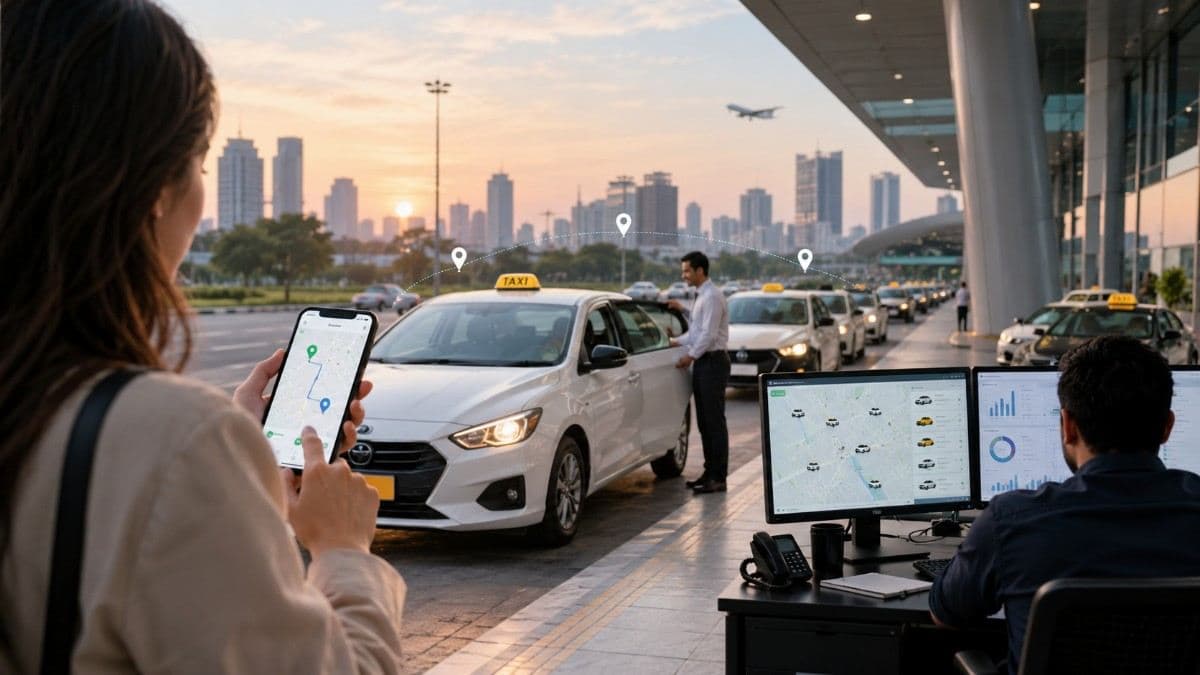
A connected rider, driver and administration platform built around the client's associations, fleets, fare model and regional payment needs.
| Engagement | Details |
|---|---|
| Client | Taxi membership organization |
| Solution | Union-owned ride-hailing and taxi operations platform |
| Channels | Rider app, driver app and web administration console |
| Platforms | Android, iOS and web |
| Status | Live in market |
A Connected Taxi Booking and Fleet Management Platform
A taxi membership organization needed a digital booking channel that could compete with international ride-hailing apps without disrupting the associations and fleet relationships that organize the local taxi sector. The platform brings rider booking, driver operations, union administration, regional card payments and cash settlement into one cloud-hosted platform for Android, iOS and the web.
About the Client
The client represents taxi operators through a federation of local associations. Its membership includes independent drivers, taxi stands and fleet owners who operate multiple vehicles and employ drivers.
The Union needed a platform that would preserve this structure while giving residents and visitors the convenience they expect from a modern ride-hailing service. The product also had to keep the booking channel and the commercial value of app-based trips within the local taxi sector.
Overview
As passenger expectations shifted toward app-based services, the client faced a change in how passengers discover, book and pay for transport. A competitive response required more than a rider application. It needed a complete operating platform that reflected the Union's governance model, fixed-fare destinations, association territories, fleet ownership and member verification process.
The platform was designed as three connected products sharing one backend, one data model and one identity system. The rider application supports booking, tracking, payment, receipts and ratings. The driver application handles availability, job execution, trip history, earnings and documents. The web console gives Union and association administrators control over members, fleets, fares and ride activity.
Challenges
· Competition from a mature global product. Passengers already understood app-based booking, live tracking, upfront fares and card payments. The local platform needed to meet those expectations across Android and iOS.
· A federated membership structure. Drivers could not be treated as one interchangeable national pool. Associations, territories and lines of authority had to be represented directly in the product.
· Individual drivers and fleet owners. The operating model includes both self-managed drivers and fleet owners who assign vehicles and jobs to their own teams.
· Driver trust in settlement. Members needed a clear record of trips, earnings, tips, adjustments and payout status for both card and cash journeys.
· Regional payments and variable connectivity. The platform needed a suitable payment gateway while handling payment confirmation safely when mobile coverage was weak.
· Union-wide administration. The the client required one place to verify members, manage associations and fleets, set fares, monitor rides and investigate disputes.
Solution
1. Connected rider driver and administration products. The solution combines two React Native mobile applications with a React-based web console and a shared Spring Boot backend. Updates to a trip, payment, vehicle or member record remain consistent across every authorized view.
2. Association aware operations. Associations are first-class entities with a defined location and operating radius. Drivers register against their association, while Union administrators retain visibility across the complete network.
3. Fleet dispatch and member verification. Fleet owners can map vehicles to drivers and allocate work across their fleet. Administrators can review licenses, registration, insurance and permits before approving a driver on the platform.
4. Transparent driver earnings. The driver application presents trip history and daily, weekly and monthly earnings, including fares, tips, adjustments, payout history and settlement status.
5. Regional card and cash settlement. PowerTranz supports tokenized card-on-file, authorization, capture, voids and refunds. Cash trips post to the same ledger, giving drivers and administrators a complete settlement record.
6. Real-time trip coordination. WebSocket connections carry driver location, job offers and trip status. Firebase Cloud Messaging delivers booking, dispatch, arrival and payment events when an application is in the background or closed.
7. Cloud delivery and security controls. Cloud-hosted services scale with demand and support monitoring, backup and recovery. Token-based authentication, role-based access, encryption in transit and at rest, and protected document storage support secure daily operations.
Impact
· A booking channel controlled by the local sector. Member drivers can compete for app-based demand through a platform aligned with their own operating model.
· Union structure preserved in software. Associations retain their identity, location and operating radius instead of disappearing into one national driver pool.
· Greater transparency for drivers. Members can review their own trips, earnings and payout records without depending on manual explanations or separate spreadsheets.
· Digital tools for fleet owners. Vehicle assignment and job allocation can be managed within the platform, with records visible to authorized Union staff.
· A familiar passenger experience. Riders can book, track and pay for trips, receive receipts and submit ratings while traveling with verified local drivers.
· Centralized operational oversight. The administration console combines member approvals, associations, fleets, fare destinations and ride monitoring in one system.
Technology Stack
| Layer | Technology | Purpose |
|---|---|---|
| Mobile applications | React Native | Rider and driver apps for Android and iOS from one shared codebase |
| Web application | React | Union and association administration console |
| Backend services | Spring Boot and Java | REST APIs, dispatch, fare rules, fleet operations and payment orchestration |
| Database | MySQL | System of record for members, vehicles, trips, fares and settlement ledgers |
| Real-time services | WebSocket | Driver location, job offers and live trip status |
| Notifications | Firebase Cloud Messaging | Booking, dispatch, arrival and payment notifications |
| Payments | PowerTranz | Card authorization, capture, refunds and tokenized card-on-file |
| Infrastructure | Cloud-hosted services | Elastic compute, managed data services, object storage and monitoring |
Results
The platform is live in market across Android, iOS and the web. The delivered platform provides a shared operational foundation for riders, drivers, fleet owners, association administrators and the client.
· Three connected products. Rider and driver mobile applications operate with a centralized administration console and one backend system of record.
· End-to-end digital trip handling. Availability, booking, dispatch, tracking, completion, payment, receipts and ratings are managed within the platform.
· Unified settlement records. Card and cash trips flow into the driver's earnings and payout history, with payment status visible at completion.
· Live Union visibility. Administrators can review active drivers, fleet composition, associations, approvals, member status and ride activity from one console.
· A platform designed to extend. The existing architecture can support additional associations, corporate and hotel accounts, scheduled journeys, tourism integrations and deeper analytics.
Conclusion
The platform gives the client a modern digital channel built around local governance, established fare practices and the way drivers and fleets already operate. The Union can manage membership and ride activity centrally, drivers gain transparent trip and earnings records, and passengers receive the booking and payment experience expected from a current mobility application.
The result is a practical foundation for locally controlled mobility services that can grow without replacing the Union's existing structure.
Planning a mobility platform or operational application that must reflect local governance, payments and workflows? Talk to the Vionsys team about product strategy, mobile development, real-time systems and cloud delivery.